Waldorf Astoria Amsterdam: The Pace of Peacock Lounge
AFTERNOON TEA AT THE WALDORF ASTORIA AMSTERDAM,
SET INSIDE SIX 17TH-CENTURY CANAL HOUSES ON THE HERENGRACHT.
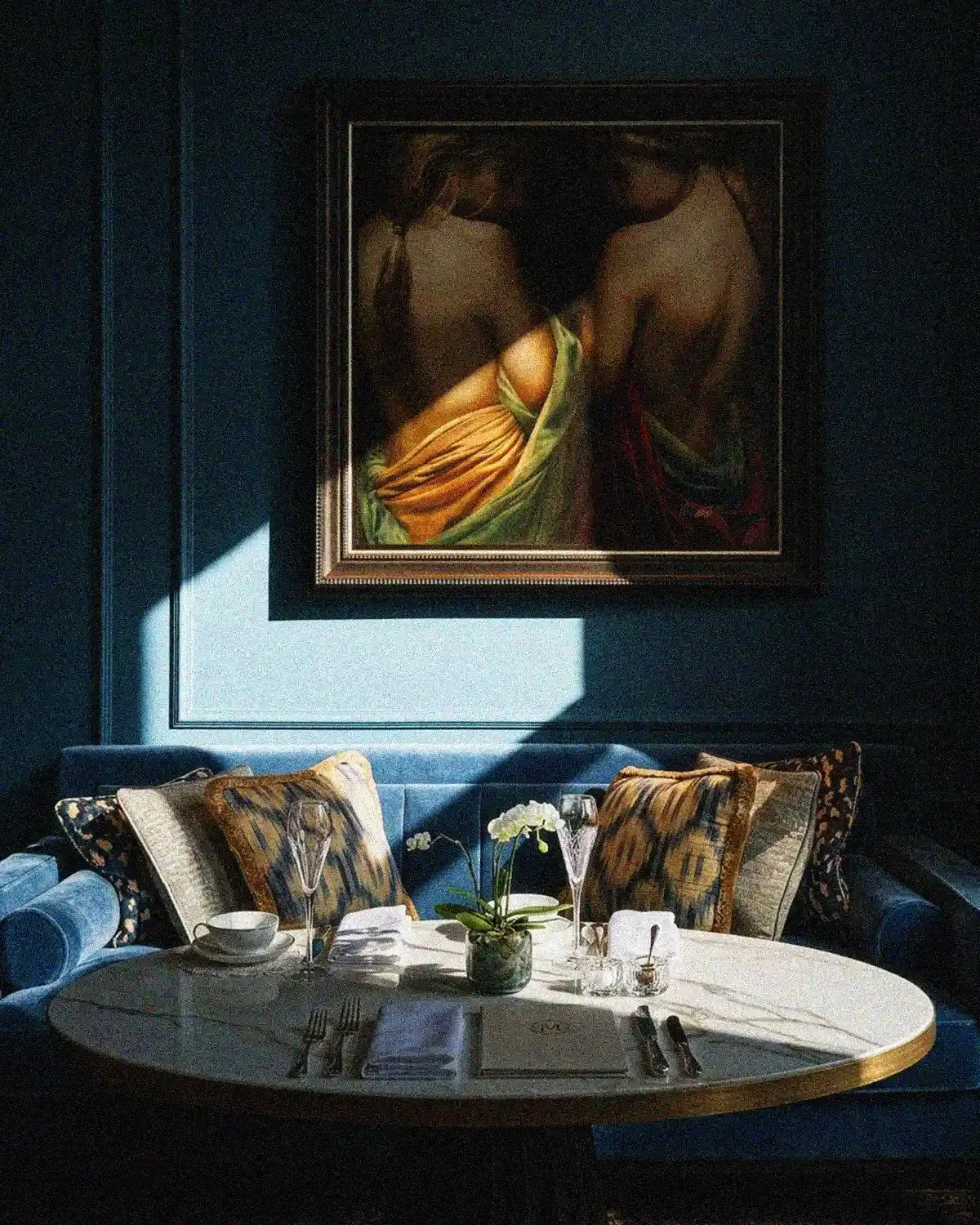
Peacock Lounge at the Waldorf Astoria Amsterdam
Stepping out of the city
Coming in from the Herengracht, still carrying the pace of Amsterdam outside, the quiet inside the Waldorf Astoria feels almost physical at first.
Bicycles continue moving along the canal. Boats pass beneath the bridges. People walk through the city with coffees in hand and phones half-raised in front of them. Then the doors close behind you and everything slows.
Not silent — Amsterdam is never silent — but softened.
Porcelain touches marble. Conversations lower themselves. Sunlight falls into the courtyard between the historic canal houses. Coats are folded over chairs. Nobody appears particularly concerned with the time.
It's a small shift, but you feel it immediately.
Set inside six restored 17th-century canal houses along the Herengracht, the Waldorf Astoria Amsterdam has quietly become one of the city's most composed addresses for afternoon tea, served daily inside Peacock Lounge. Not because it competes for attention, but because it seems entirely uninterested in doing so.
A room that lets people slow down
Much of Amsterdam's hospitality scene is built around movement. Tables turned quickly. Rooms designed for visibility rather than comfort. Beautiful interiors that still somehow leave people restless inside them.
Peacock Lounge moves differently.
The room is intimate without becoming formal: warm lighting, polished wood, muted fabrics, flowers arranged with care but without excess. Service moves quietly through the space — attentive, never interrupting.
At the next table, two women remain in conversation long after the pastries are gone. A hotel guest folds and unfolds a newspaper beside the courtyard windows without reading much of it. Tea cools between sentences. Nobody seems in much of a hurry to leave.
Some spaces accelerate people; others soften them.
Rooms like this are becoming rare in central Amsterdam.
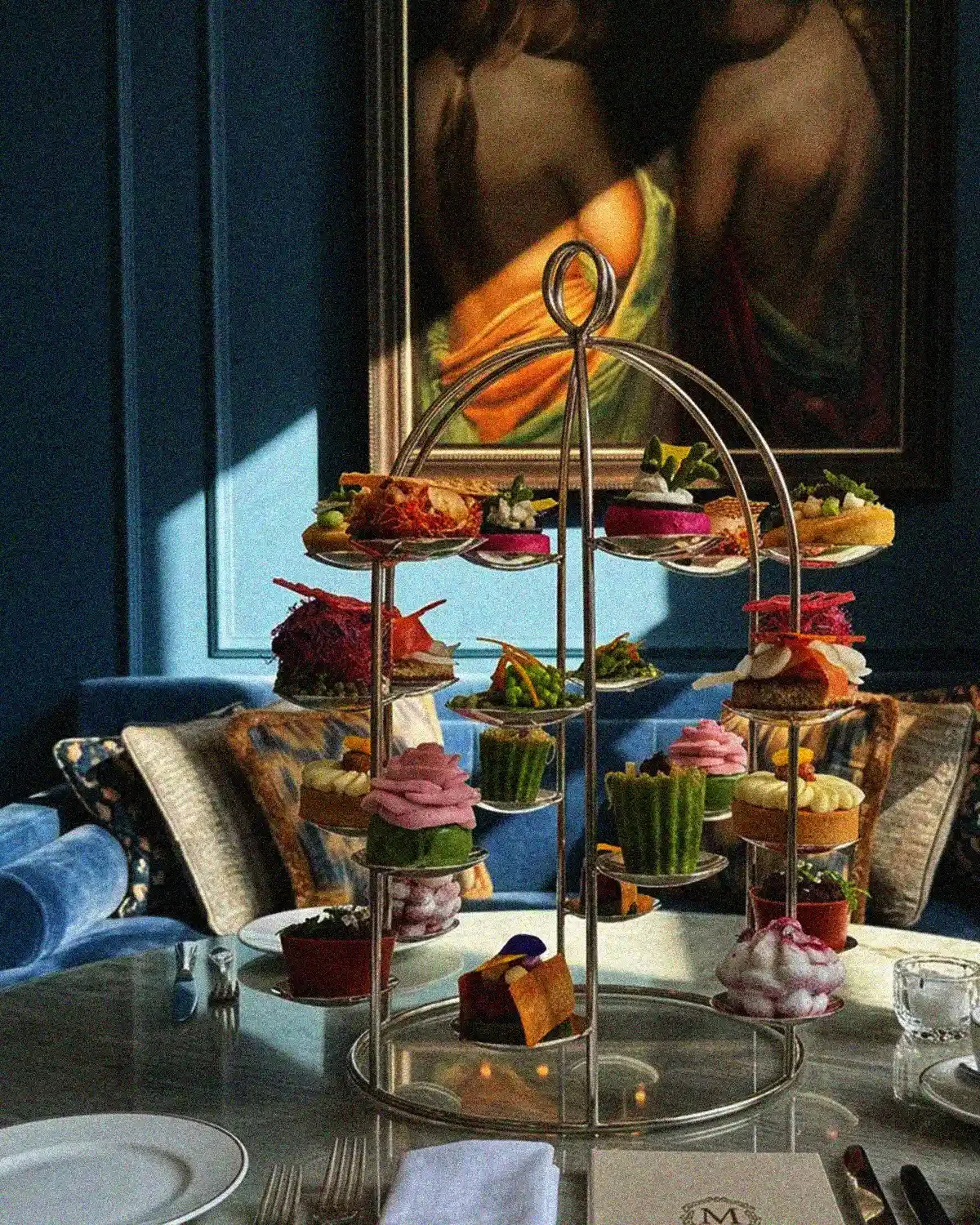
Botanical Garden afternoon tea
The ritual of afternoon tea
Tea arrives first — floral blends, deeper blacks, gentler herbal infusions — paired course by course with both the savoury and sweet sides of the menu. The pairing slows the experience further and shifts attention onto flavour, pacing, and conversation.
The savouries lean spring-like without becoming complicated. Beetroot, mackerel and goat cheese, earthy and light at once. Tuna with yuzu and wasabi, sharp enough to keep the palate awake. The flavours feel clean and balanced, nothing pulling too hard in one direction.
The scones arrive warm enough to release steam when broken open, served with clotted cream and red fruit compote. Comforting, in the way afternoon tea should be.
What feels most striking is not the formality of the ritual but how unfamiliar it has become to sit somewhere without being moved along.
Compared to the faster rhythm of Amsterdam cafés, afternoons here unfold at a different pace.
Sweetness, light, and the courtyard
The pastries arrive in sequence as sunlight shifts against the courtyard windows. A rhubarb, violet and hibiscus meringue feels airy and floral rather than overly sweet. A chocolate, tarragon and spring-herb pastry mirrors the atmosphere of the hotel itself — layered, soft, quietly surprising. Even the sweet courses arrive with restraint.
What stays with you afterwards is rarely the obvious thing. The warmth of porcelain against your hands. The brief pause before tea is poured. The way conversations stretch longer here. The feeling that the room asks nothing from you.
There is precision. There is also ease.
The luxury of staying a little longer
The experience feels of a piece with the Herengracht itself — historic, understated, composed. A version of Amsterdam that still values quietness in the middle of the city.
The crowd reflects it. Hotel guests sit beside local visitors escaping busy workdays for a few hours. Women linger over tea near the courtyard. Conversations soften into the background. The atmosphere feels less about occasion and more about permission: permission to slow the day down.
Perhaps that is what makes afternoon tea at the Waldorf Astoria Amsterdam memorable. Not only the tea or the food, but the feeling of stepping briefly outside the pace of work, notifications, reservations, movement — and sitting for a few hours over good tea and conversation without feeling pushed along.
By the time the cups are cleared, early evening has settled over the canal outside. Nobody seems eager to leave.
Afternoon tea is served daily in
Peacock Lounge at the Waldorf Astoria Amsterdam,
Herengracht 542–556
1017 CG Amsterdam.
Seatings from Wednesdays to Sundays between 3 — 5pm.
From €90 per person or €100 with Pol Roger champagne.
Reservations recommended.
Visit the website for the most up-to-date information.