The Cultural Myth Of The Mother
How film, literature, art, and music have imagined motherhood — and what those images reveal
A cultural essay exploring how mothers in film, literature, art, and music have appeared as saints, protectors, villains, and symbols — and what each archetype reveals about the society that produced it.
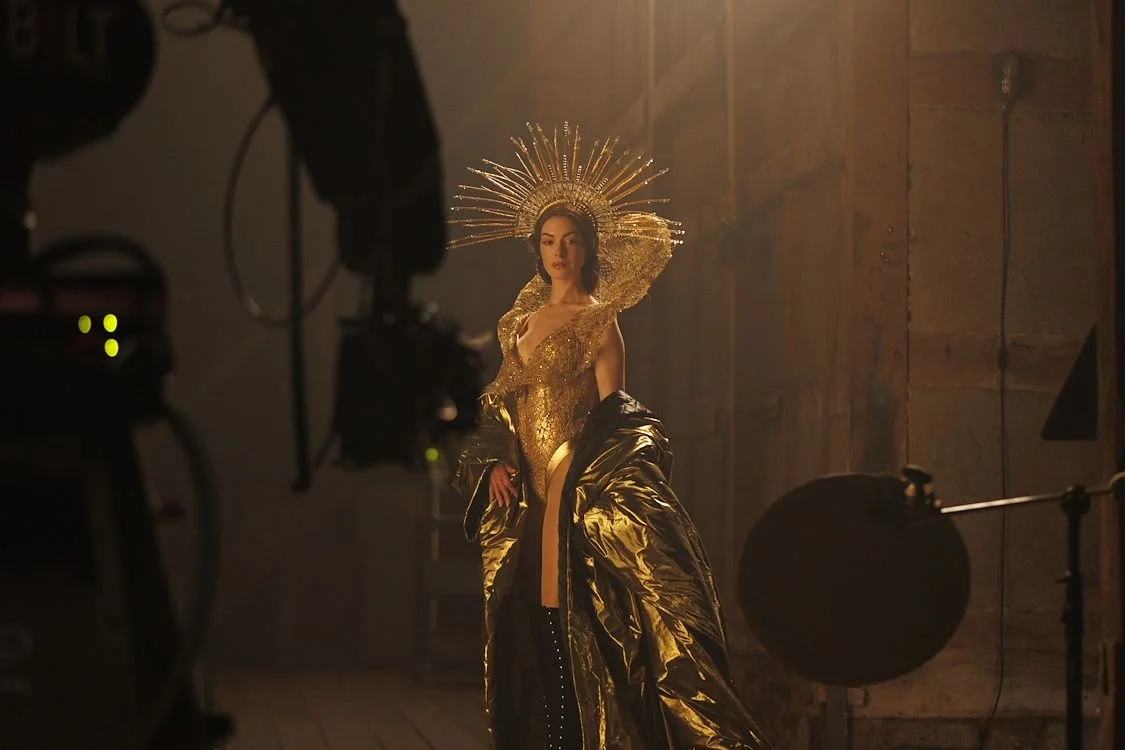
Anne Hathaway in Mother Mary (2026)
THE MOTHER AS CULTURAL FICTION
Culture has been imagining mothers for as long as it has been producing stories. Paintings, novels, films, operas — the mother appears in all of them, reliably and in quantity, which makes it rather striking that so few of these depictions look like the same person.
In one corner: the serene caregiver whose needs evaporate the moment the child arrives. In another: the fiercely protective figure who would dismantle the world to keep her family intact. In a third: the mother who twists the people she loves, whose influence extends decades beyond childhood, whose damage is the engine of the plot. And more recently, cautiously: the mother who is also a person, who has ambitions and a sense of humour and a life that doesn’t fully reorganise itself around the children.
These are not neutral portraits. Across centuries of culture, mothers in film, literature, art, and music have been used to reflect not just individual experience but social expectation. Each depiction tells us something — not just about the mother shown, but about the culture doing the showing, and what it needed mothers to be at that particular moment. The saintly caregiver was a Victorian invention that served Victorian interests. The threatening mother arose when female independence began to look genuinely possible. The independent mother became visible precisely when her existence became harder to ignore.
Culture has rarely been interested in what motherhood actually feels like. It has been far more interested in what mothers are supposed to mean.
These recurring portrayals form what might be called the cultural archetypes of motherhood — images that shape how societies imagine what a mother should be, long before most people experience it themselves, and often far removed from the realities of modern motherhood. The real mother — tired, layered, ambivalent, loving, occasionally furious, getting on with it — tends to appear at the margins. When she does reach the centre of the story, it tends to be the most interesting story in the room.
This essay traces five versions of the cultural mother: the devoted, the protective, the difficult, the independent, and the symbolic. They don’t map neatly onto eras or onto each other. But together they sketch what culture has wanted from mothers, what it has feared, and what it is — slowly, still — learning to allow.
The Devoted Mother ArchetypE
The oldest version of the cultural mother is the devoted one — patient, warm, self-effacing, present. Her needs don’t feature much, because they have been subsumed entirely into the needs of the people she cares for. In the cultural imagination of most of the nineteenth and much of the twentieth century, this was not depicted as a loss. It was depicted as moral achievement.
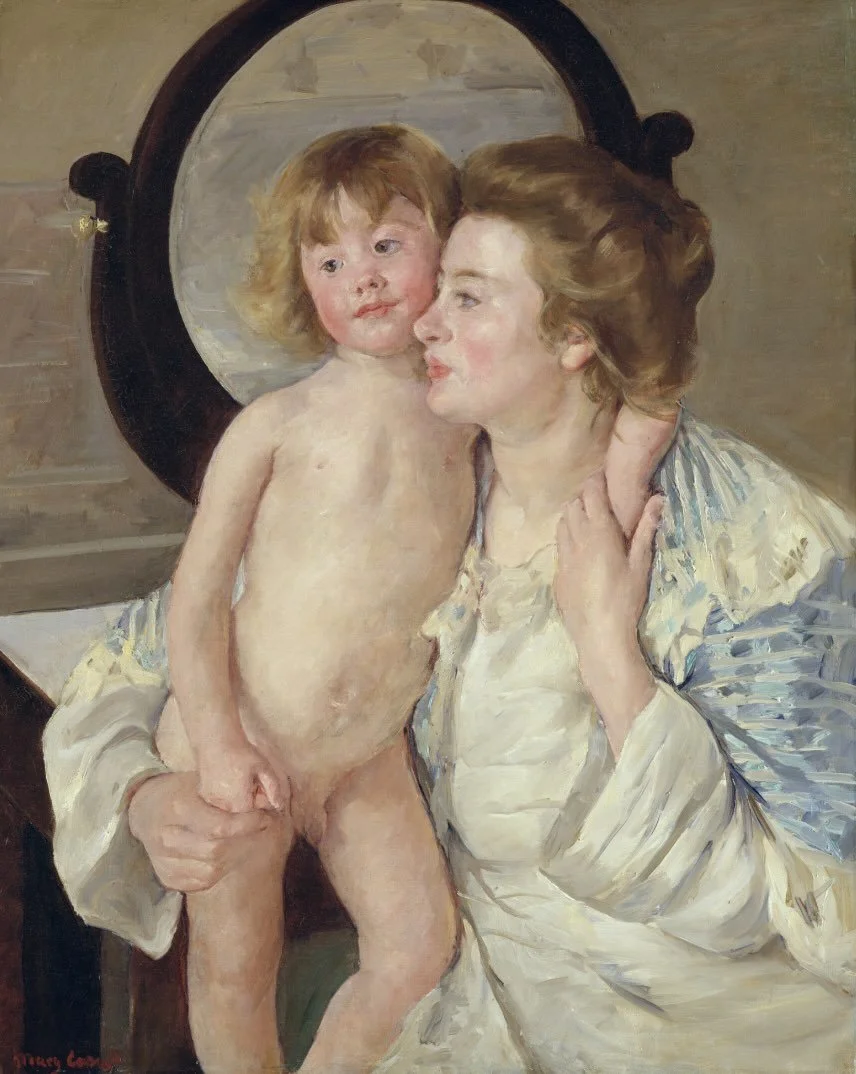
Mary Cassatt painting of a mother and child
Mary Cassatt painted this version of motherhood with tenderness and precision that still reads as genuine affection rather than ideology — and yet the ideology is there. Her mothers gaze at their children with a focused absorption that suggests nothing else exists. The outside world is genuinely absent from these canvases. What Cassatt captured was the Victorian ideal at its most graceful: the home as the mother’s natural domain, the child as her natural subject.
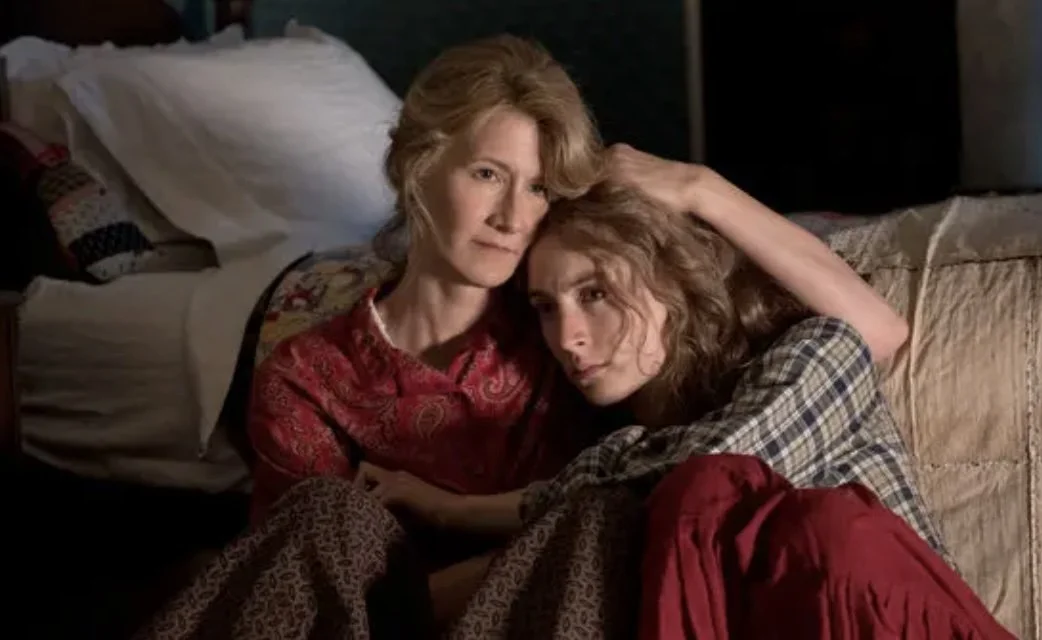
Marmee March in Little Women (2022)
Marmee March is the literary version. She is patient to a degree that would challenge most actual people, wise in a way that requires never being visibly distressed, present in a way that involves no competing claims on her time. She is, in short, a fantasy — and Louisa May Alcott, who based her on her own mother, knew this better than anyone. The real Abigail Alcott was exhausted, financially anxious, and far more complicated than the woman on the page.
Aurora Greenway in Terms of Endearment is a later, sharper iteration: devoted to the point of interference, her love indistinguishable from control. She is comic and frustrating and, in the film’s final act, devastating. Shirley MacLaine plays her as a woman who has made her daughter the entire substance of her life, which is precisely the problem. The devoted mother archetype contains, embedded within it, the warning about what happens when selflessness is the only available identity.
The devoted mother is comforting as an image. As a job description, she is exhausting. The culture that produced her was careful not to examine the cost too closely.
The Protective Mother Archetype
The protective mother is the devoted mother with the volume turned up and the moral stakes changed. Where the devoted mother sacrifices herself quietly, the protective mother acts — sometimes at terrible cost, sometimes crossing lines the story asks us to consider carefully before judging.
Sethe, in Toni Morrison’s Beloved, commits the act that defines the novel because the alternative, in her understanding, is worse. Morrison doesn’t allow the reader an easy position on this. The act is both an expression of profound maternal love and something that destroys the possibility of ordinary love between Sethe and the child who survives. The protective impulse, taken to its limit, becomes indistinguishable from harm. Morrison was interested in what slavery does to the bond between mother and child — how it can warp the most fundamental human relationship into something unrecognisable.
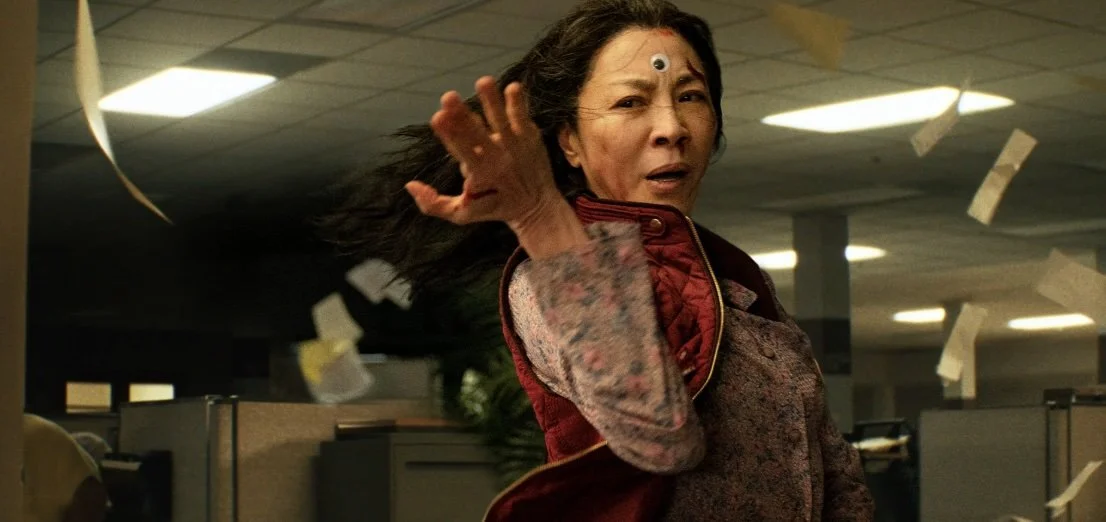
Michelle Yeoh as Evelyn Wang in Everything Everywhere All at Once
Evelyn Quan Wang in Everything Everywhere All at Once operates across the multiverse with the same basic maternal logic: the desire to protect her daughter from every possible version of pain. The film is wiser than it might appear. It understands that protection and control are very close neighbours, and that a mother who cannot allow her child to struggle is not protecting her from anything. The resolution — Evelyn choosing presence and acceptance over intervention — is the film’s argument about what protective love actually requires.
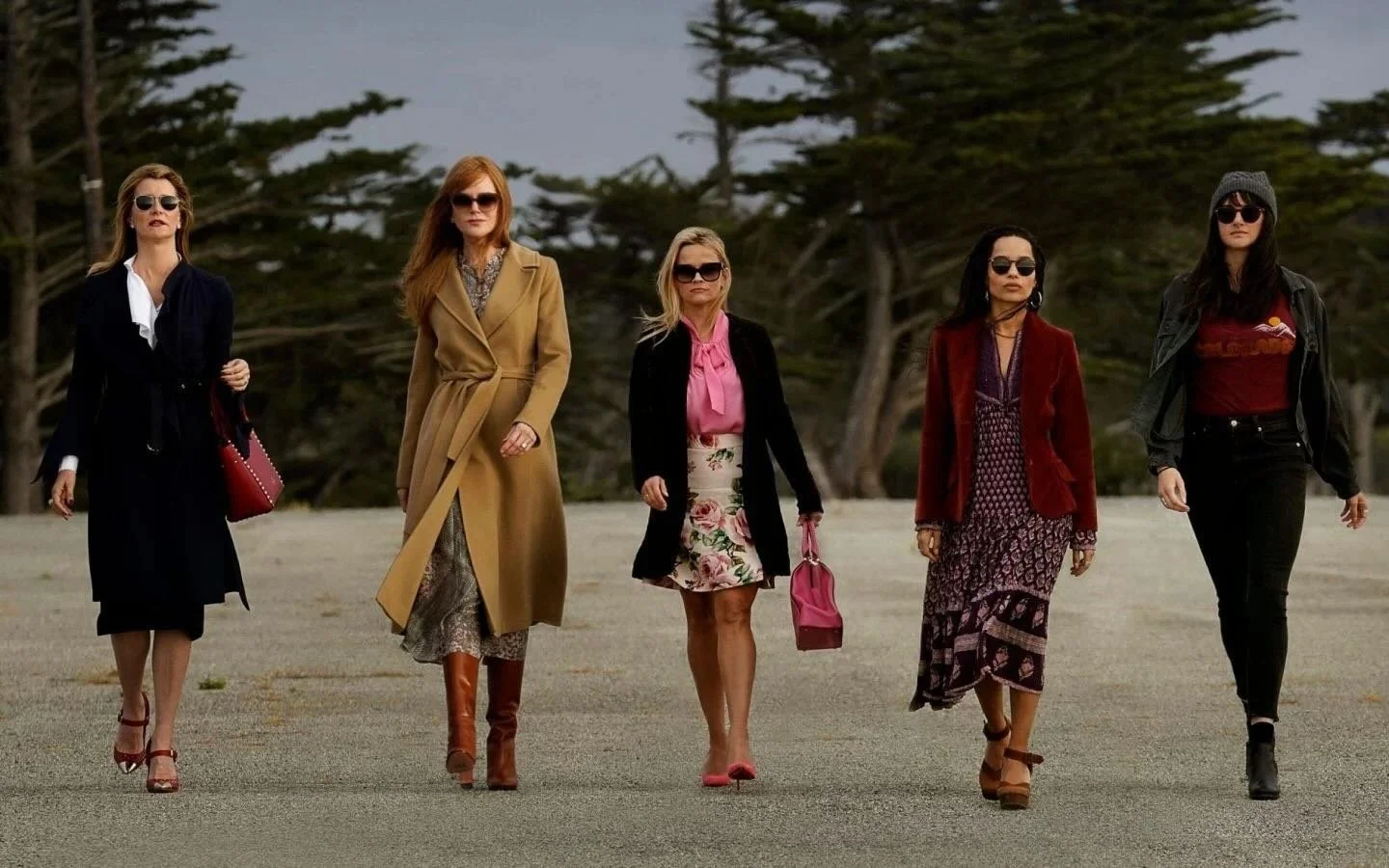
Big Little Lies
The mothers in Big Little Lies occupy this archetype in a more recognisable register: school-gate politics as territorial defence, fierce monitoring of social dynamics that looks, from the outside, like aggression dressed as concern. The show is partly about how the protective instinct, in the absence of genuine threat, finds smaller and smaller objects to fix itself to. And partly about what happens when the threat is real, and the protection required is of a different and more costly kind.
The protective mother asks an uncomfortable question: at what point does the love that would do anything for a child become the thing the child needs protecting from?
The Difficult Mother ARCHETYPE
Culture has always been fascinated by the mother who fails. Not through absence, exactly, but through something worse: a presence that damages. The difficult mother doesn’t disappear from her children’s lives — she dominates them, at a cellular level, long after she has left the room.
Livia Soprano may be the defining version of this archetype in contemporary television. She weaponises her own helplessness, deploys guilt with precision, and is, as Tony’s therapist suggests, a diagnosis in human form. The show is interested in how her damage echoes through everything her son does — every relationship he destroys, every moment of connection he finds himself unable to sustain. Edie Falco’s Carmela is a quieter argument running alongside: a woman trying not to become what Tony’s mother was, while also, in important ways, replicating it. The transmission of damage across generations is the show’s real subject.
Logan Roy is Succession’s famous centre, but Caroline Collingwood — largely absent, constitutionally cold — is the key to understanding what Logan actually produced. She didn’t damage her children through malice. She simply found other things more interesting than they were. The show understands that indifference can be more formative than cruelty.
Mrs Bates never appears in Psycho, which is its own argument. She exists only in Norman’s voice, his memory, his terrible ventriloquism. Hitchcock understood that the most frightening version of the difficult mother is the one so thoroughly internalised that she has replaced part of the self entirely.
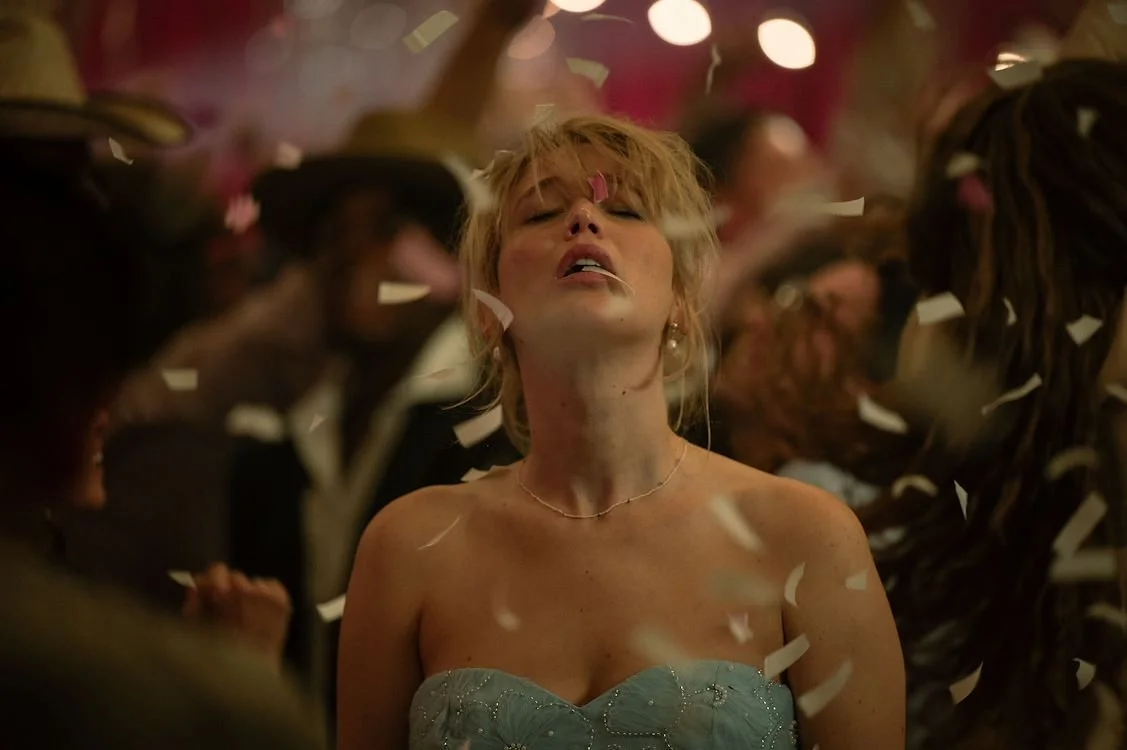
Jennifer Lawrence in Die My Love (2025)
Contemporary culture has begun, cautiously, to approach maternal difficulty from a different angle — not as villainy but as collapse. In Die My Love, the unnamed mother, played by Jennifer Lawrence, at the centre of Ariana Harwicz’s novel and its film adaptation experiences postpartum depression not as quiet sadness but as something closer to psychic combustion. The story refuses the sentimental language that usually surrounds new motherhood. Instead it shows a mind fragmenting under the pressure of love, responsibility, and isolation — a person trying, and not always succeeding, to survive an experience the culture usually insists she should be grateful for. It replaces the myth of maternal instinct with something recognisably human. Which is, as it turns out, far more unsettling.
The difficult mother is not the opposite of the devoted one. She is often the same person, seen from a different angle, at a different hour of the day.
The Independent Mother ARCHETYPE
The independent mother is a relatively recent arrival in the cultural landscape — a figure who is recognisably, specifically herself rather than a function attached to a role. She remains visible not only in how she speaks and works, but in the way personal style survives motherhood in edited, more deliberate form. She has interests. She has a past. She makes mistakes that are not maternal mistakes but simply human ones. She is allowed to be funny, difficult, and interesting in ways that have nothing to do with her children. She is also allowed, increasingly, to remain visible in smaller daily rituals — including the quick routines that make a face look awake, composed, and still recognisably her own.
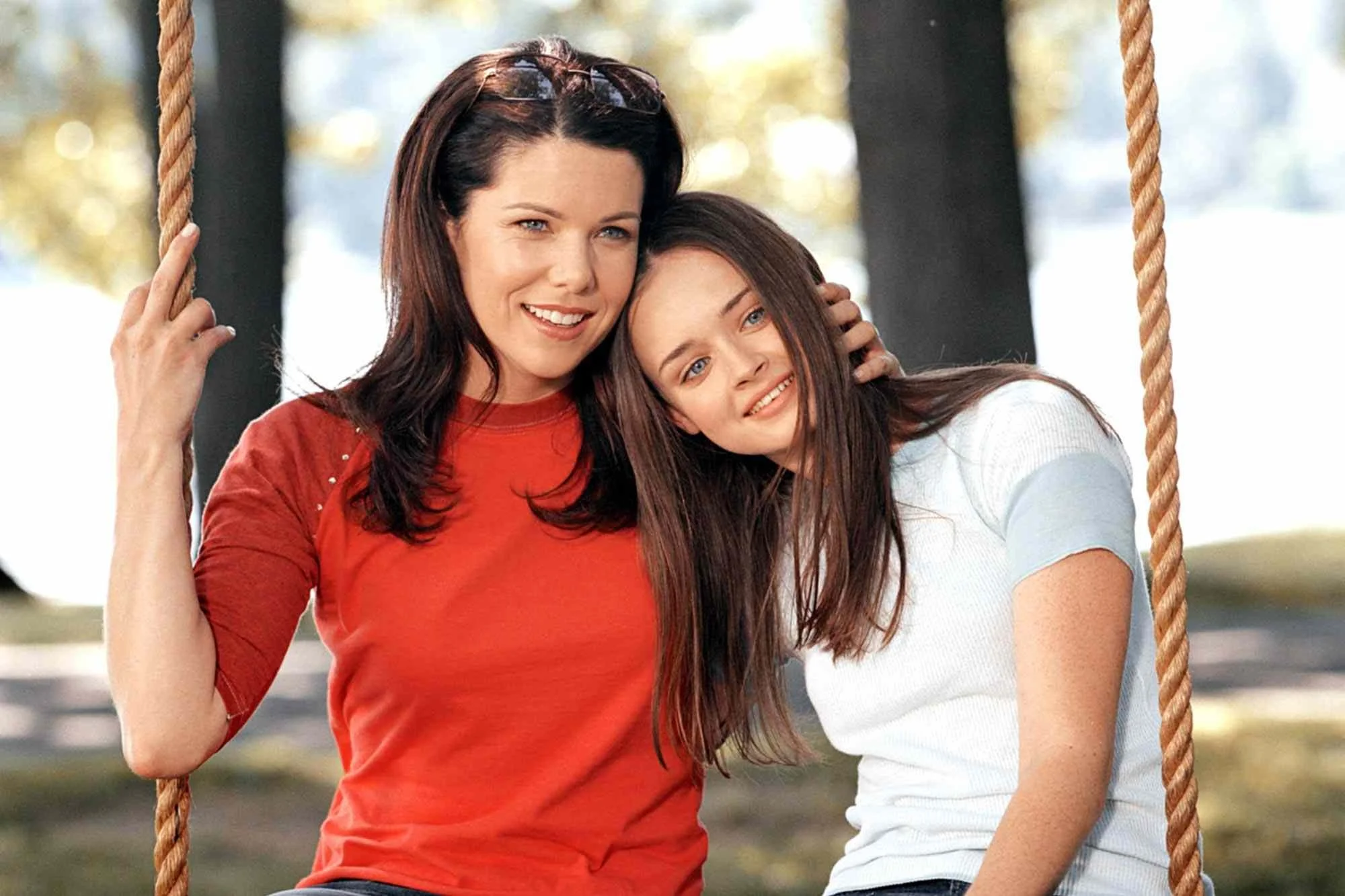
Lauren Graham as Lorelai Gilmore in Gilmore Girls
Lorelai Gilmore is the obvious starting point, because Gilmore Girls makes the relationship between Lorelai and Rory the explicit subject rather than the background. What’s striking is that Lorelai is not defined by her sacrifice or her devotion — she is defined by her personality, which happens to include being a mother. She is competitive, nostalgic, anxious, witty, occasionally selfish, deeply loving. A person who also has a child, rather than a mother who also has a self. This was less common than it should have been in 2000, and the show knew it.
Beyoncé’s engagement with motherhood across her work — from the direct tenderness of Blue to the political complexity of Lemonade — is one of the more interesting cases in contemporary culture. She makes motherhood and ambition coexist without resolving the tension between them. Blue is pure adoration. Lemonade is about inheritance, survival, and the weight of what is passed down. Neither reduces her to a function; both take the experience seriously as something with its own emotional and political weight.
Fleabag, in Phoebe Waller-Bridge’s series, is not a mother — but her relationship to motherhood (the dead one, the bad substitute, the question of whether she herself will become one) is the emotional spine of the whole thing. The show is interested in what culture hands women about what mothers are supposed to be, and how a particular kind of woman learns to live in the gap between that image and her actual experience.
The independent mother became visible in culture not when she appeared, but when the culture finally stopped treating her existence as a problem requiring explanation.
The Mother as Cultural Symbol
In art especially, the mother has a tendency to become something other than a person. She becomes a symbol of stability, memory, origin, home — the fixed point around which the world organises itself. This can be a form of tribute. It is also, quite often, a form of erasure.
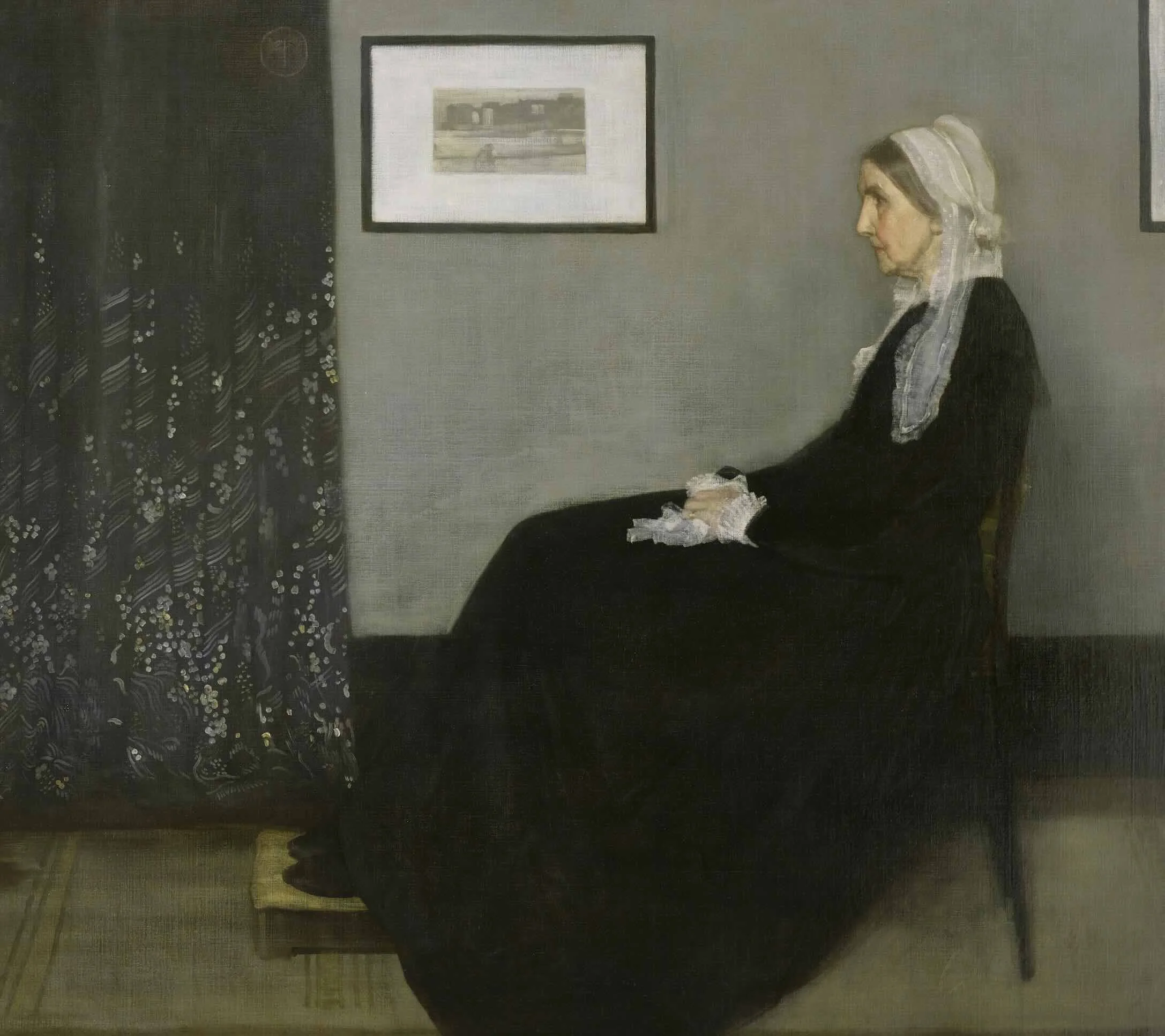
Whistler’s Arrangement in Grey and Black No.1
Whistler’s Arrangement in Grey and Black No.1 — known universally as Whistler’s Mother, a title the artist himself didn’t use — is the most complete example of this transformation. The woman in the painting is Anna McNeill Whistler, a specific person with a specific history. The image has become a cultural shorthand for the concept of motherhood itself: contained, formal, facing sideways as if looking toward something the viewer cannot see. Anna Whistler has largely been absorbed into the archetype. The individual has been replaced by the idea.
Louise Bourgeois’s Maman works differently. The enormous spider — over nine metres tall, cast in bronze and steel — is named for Bourgeois’s mother, who was a weaver, and who was also, in Bourgeois’s account, protective, patient, clever, and indispensable. The spider as mother is not a comforting image in any simple sense. It is large enough to inspire unease. It is also, if you look at it carefully, tending its eggs. Bourgeois refused the sentimental version; she wanted the scale and the complexity and the slight fear alongside the love.
Dorothea Lange’s Migrant Mother — Florence Owens Thompson, photographed in 1936 — became the image of the Great Depression in a way that simultaneously made her famous and made her invisible. The photograph circulated everywhere; Thompson herself received nothing from it, and spent years struggling to be acknowledged as the person in the image rather than its symbol. The photograph is extraordinary. The story of what happened to the woman in it is a lesson in what it costs to become one.
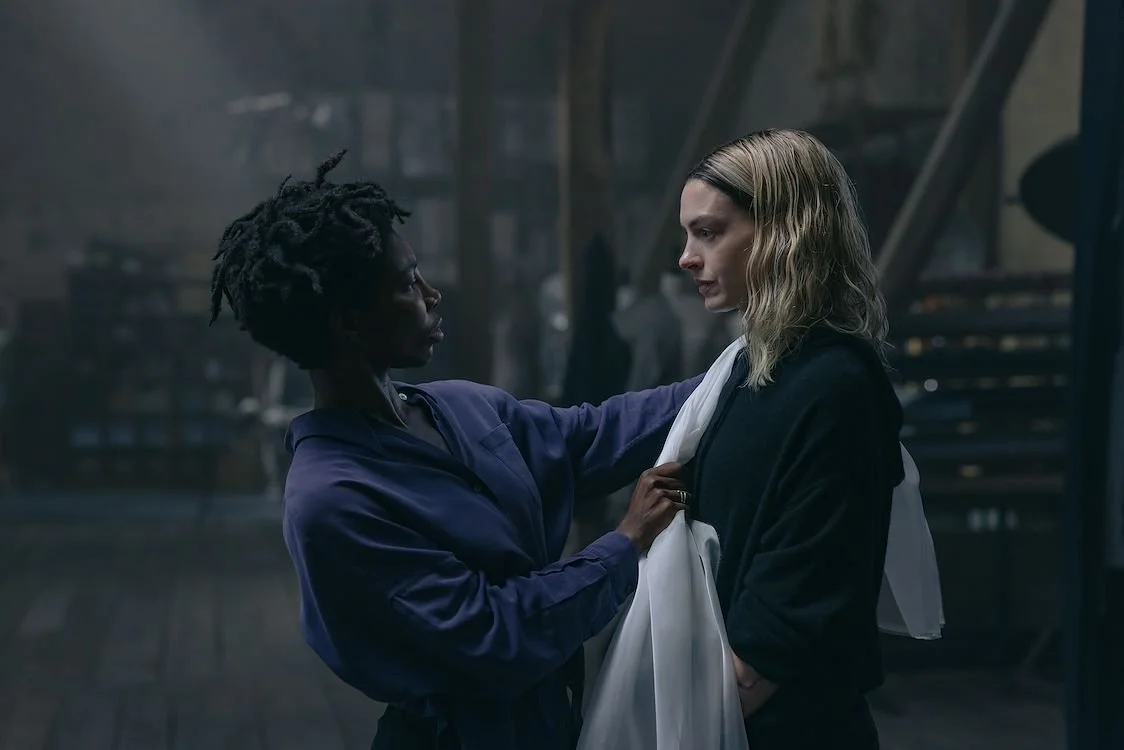
Anne Hathaway in Mother Mary (2026)
David Lowery’s Mother Mary, arriving from A24 this April with Anne Hathaway in the title role, extends this symbolic tradition into the age of celebrity. Hathaway plays an iconic pop star whose stage name — Mother Mary — has become a projection screen for an audience’s desires and expectations, entirely separate from the woman underneath it. The film treats the maternal title not as a description but as a construction: something built, maintained, and eventually impossible to carry. In Lowery’s telling, the gap between the symbol and the person wearing it is not background detail. It is the whole subject.
The mother as symbol is always a reduction. The best of these works carry the weight of the person inside the symbol, if you’re willing to look for her.
THE REAL MOTHER
Across art, literature, film, and television, the mother appears again and again — reshaped by each era that imagines her, pressed into the service of its anxieties and ideals.
The cultural mother is almost never the real one. The real one is often busy managing the quiet systems that keep early parenthood running in the background. She is more patient, more sacrificial, more frightening, more symbolic, or more effortlessly herself than the women who actually live the experience. Culture has preferred clarity, and actual motherhood resists it.
What’s striking, looking across all five archetypes, is how little they communicate with each other. The devoted mother and the difficult mother seem like opposites — and yet Aurora Greenway contains both. The protective mother and the independent mother seem to contradict — and yet Evelyn Quan Wang manages to be both by the end of her film. The symbolic mother seems to require the erasure of the individual — and yet Bourgeois built her enormous spider specifically to insist on the complexity alongside the scale.
Which is why the most interesting cultural question right now may be the one A24’s Mother Mary is asking in April: what happens to a woman when the symbol she has been given — or has chosen, or has had projected onto her without consent — becomes the only thing the world is willing to see? Hathaway’s character carries the weight of an entire cultural archetype in her stage name. The film is, among other things, about the cost of that. About what it takes to remain a person inside an image that the culture has decided means something larger than you are.
Modern culture is, slowly and sometimes reluctantly, producing mothers who are allowed to contain contradictions — to be devoted and ambivalent, protective and imperfect, symbolic and specific. These are harder stories to tell. They require the audience to sit with more than one thing at once. They also, not coincidentally, tend to be the most interesting stories in the room.
The real mother lives somewhere between all of these versions. She is caregiver and individual, protector and person, sometimes failing and mostly managing. She is also the person moving through the practical architecture of the baby year, held up less by myth than by systems, objects, and repetition. She is not a symbol, though she is sometimes treated as one. She is not an archetype, though she contains several. She is, in the end, the thing that culture keeps trying to fix in place — and keeps finding that she has moved.
The most interesting cultural depictions of motherhood are the ones that allow all of this to exist at the same time. The complicated ones. The ones that don’t resolve neatly — because neither does she. In real life, that complexity is carried not only in stories but in the objects and rituals that now define modern motherhood.
Mother Mary, directed by David Lowery and starring Anne Hathaway, will premiere in theatres worldwide in April 2026 as an A24 release.
THE MODERN MOTHER
This editorial is part of The Modern Mother, a Currant series exploring how motherhood is being reshaped across culture, style, design, and daily life. Through essays, journals, and curated selections, the series examines the objects, rituals, and ideas that define contemporary motherhood.
CONTINUE READING
This journal explores how thoughtful design can support the daily realities of the baby year. Through moments like the first walk, the first coffee outside, and the first winter, we look at how the Cybex system helps modern mothers move through early parenthood with greater ease. It is a story about motherhood, design, and the objects that quietly shape the rhythm of the first year.