The Baby Year Essentials
The Architecture of the Baby Year — with Cybex
The first year of motherhood is built through systems, rhythms, and the objects that make daily life more livable. This journal explores the baby year through a selection of Cybex essentials — from the Cloud T i-Size car seat and Lux Carry Cot to the e-Priam stroller and Coya carrier — and how thoughtful design supports the infrastructure of modern motherhood.
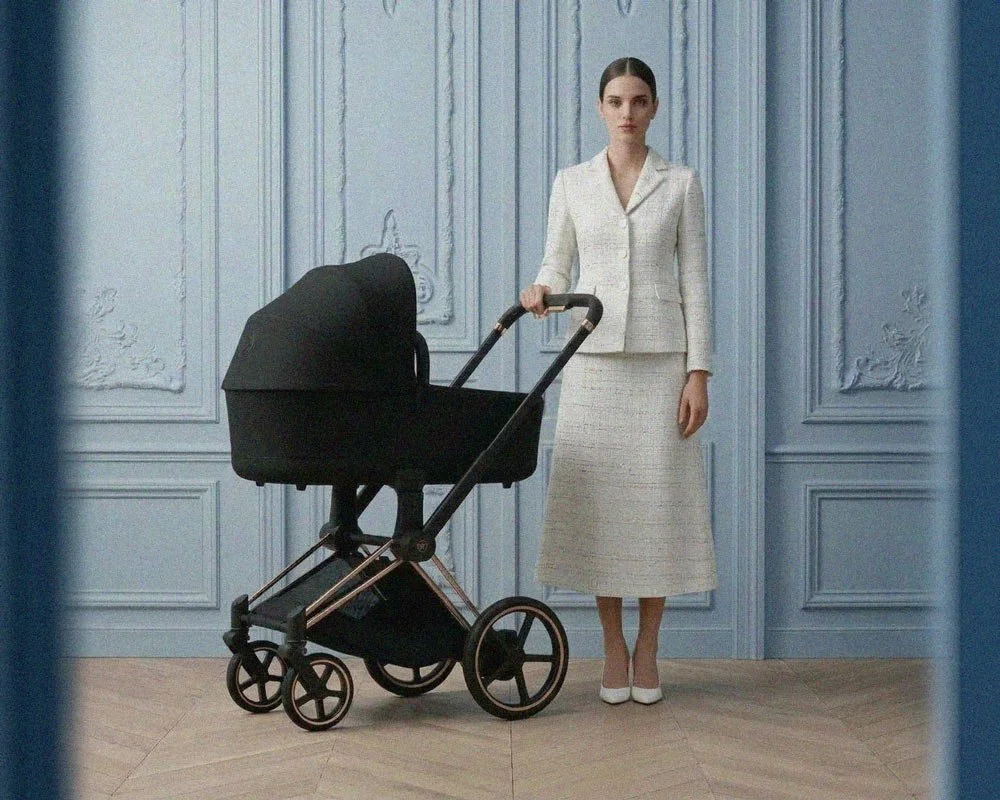
The modern mother aesthetic is not only visual. It is logistical — part of the broader shift in identity and ambition explored in the modern mother.
She is described in terms of what she wears, how her home looks, and the timeless, restrained wardrobe choices that signal a particular way of living.
But the objects that define her life in the baby year are not chosen for their appearance first. They are chosen because they work—quietly, efficiently, repeatedly—because the first year of motherhood leaves almost no room for friction. The aesthetic follows from the function, not the other way around — whether in clothing, the quick routines that make a mother look put together in five minutes, or the objects she moves through the city with.
The first year of motherhood is not chaotic—it is infrastructural.
She is stylish, yes. But she is also operating a small, complex household built around a person who cannot communicate, cannot wait, and cannot be reasoned with at three in the morning. She chooses objects that save minutes, because minutes compound into hours, and hours into the difference between functioning and merely surviving. In the baby year, the right objects do not simplify life. They make it livable.
The First Ride Home
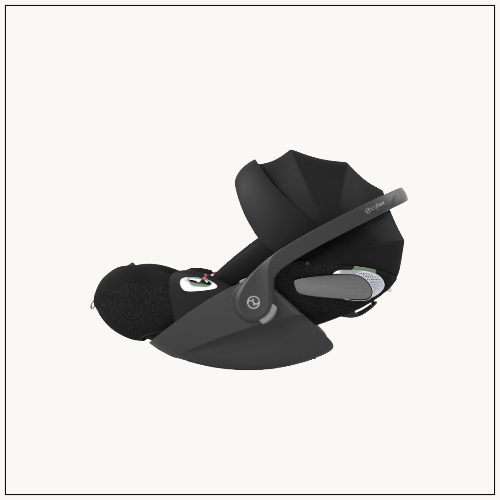
the Cloud T i-Size car seat
The scene: The ride home from the hospital is short, careful, and nothing like any drive before it. You have made this journey dozens of times. You know every turn, every junction, the particular timing of the lights. None of that knowledge applies now. The child has never been in the world. Suddenly, the world is moving around them—and every turn feels consequential, every bump in the road amplified beyond reason. You leave the hospital with a strange new vigilance that will not fully leave you for years.
The essential: The Cybex Cloud T i-Size car seat is built for precisely this moment: side-impact protection, a recline designed for a newborn's still-forming spine, the quiet authority of German engineering at a moment when reassurance is what you need most. One product specification matters above all others—it holds.
But the engineering is secondary to what this actually is. This car seat is your baby's first seat in the world. The first time they are held somewhere that isn't your arms. The first time the responsibility that is now yours takes physical form.
The Cloud T's compatibility with the Cybex e-Priam stroller system means this moment isn't isolated—it's the opening of a system that will carry you both through the year ahead. Hospital to car, car to stroller, stroller to the street outside your front door. The transitions are seamless because they were designed to be. The baby stays secure. You stay sane. The architecture holds from the very first journey.
The Cloud T I-Size is featured in our The Modern Mother Edit.
The First Walk
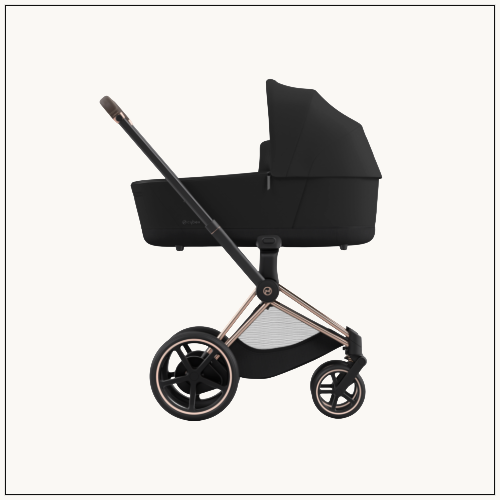
the e-Priam & the Lux Carry Cot
The scene: There is a particular pride in that first walk outside—tentative, probably shorter than planned, momentous in its complete ordinariness. You are pushing a stroller. You have become a person who pushes a stroller. The world expands and contracts simultaneously: smaller because it is now measured by nap schedules and feeding windows, larger because you are seeing it through entirely different eyes.
The essential: In the earliest weeks, the baby rides in the Lux Carry Cot—elevated to a higher position than most bassinets, generously proportioned, designed to give a newborn real room to stretch and move. It transforms the stroller into a mobile room: quiet and protected, the city visible but held at a careful remove while the baby sleeps through all of it. When the walk ends, the Carry Cot folds compact directly onto the stroller frame—no separate bag to locate, no awkward reconfiguration at the boot of the car. It simply folds, and disappears, and takes up none of the space you no longer have to spare.
The e-Priam moves through the city the way it was always meant to. All-wheel suspension absorbs the cobblestones, the uneven paving, the abrupt transition from pavement to café terrace that catches lesser strollers mid-stride. And on the hills—the inclines you genuinely never noticed before you were pushing weight uphill on four hours of sleep—the Smart Hill support arrives quietly. Powered assistance on the ascent. You reach the top composed rather than breathless, the baby undisturbed, the morning still intact.
The canopy extends when the light shifts. The cup holder—the unlikely luxury of the cup holder—means your coffee travels at stroller height, still hot, while the city wakes up around you.
The walk is short. The world feels newly available. The stroller is what makes it so.
The First Carry
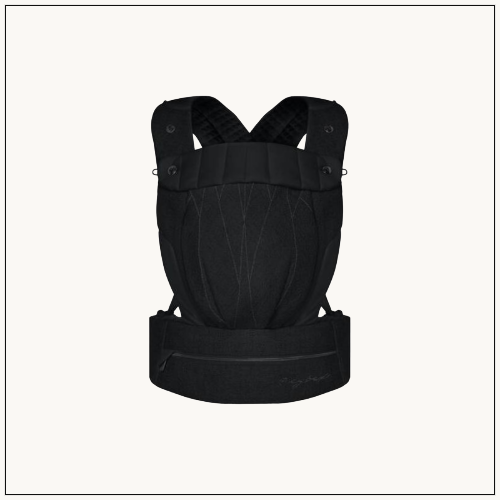
The Coya carrier
The scene: There are days in the early weeks when the stroller stays by the door. The baby does not want distance. They want contact—the warmth of your body, the rhythm of your breathing, the specific reassurance of being held against the person they have known longest. These are not logistical failures. They are part of the biology of a newborn, and fighting them is exhausting. Working with them is not.
The essential: The Cybex Coya carrier is where carrying and moving through the world meet without compromise. The baby is held in the ergonomically correct position—hips supported, spine naturally curved, weight distributed the way it should be—while your own back and shoulders carry the load across a wide, padded structure that doesn't punish you for an hour of use. You are not white-knuckling through a walk. You are walking. The carrier does the structural work; you provide the warmth.
There is a particular intimacy to this phase that the stroller, however good, cannot replicate. The baby asleep against your chest in the Coya while you move through the market, or sit at a friend's kitchen table, or stand in the doorway watching it rain. Hands free. Baby close. The two of you a single unit moving through the world.
The transition between carrying and strolling is not a hierarchy. Some days call for one, some for the other, and the Coya and the e-Priam are not in competition—they are a complete answer to the range of what the first year asks of you. The carrier for closeness. The stroller for distance. Both for the days when you are not entirely sure which you need until you are already out the door.
The First Grocery Stop
The scene: The supermarket becomes an expedition the first time you do it alone with a baby. The logistics that were once automatic are now choreography. Where to park so the door opens wide enough. Whether the trolley will fit alongside the stroller. How to hold both things at once when your hands are not free. These are the calculations of early motherhood: invisible to everyone else, completely consuming to you.
The essential: The baby fell asleep in the car. Staying asleep is the entire strategy. The Cloud T clicks into the e-Priam chassis in a single motion—no adjustment, no repositioning, no risk. The baby does not stir. You have twenty-five minutes, maybe thirty if you're fortunate. The stroller moves through the aisles with an ease that feels almost unfair given how much else is hard right now, and the generously sized under-seat basket carries what you came for—groceries, changing bag, the things that now travel everywhere with you—without adding bulk or weight to the push.
And when it's time to leave: one hand. The one-hand fold means you don't need to put the baby down or free up both arms for a moment you simply don't have. One motion, the stroller collapses cleanly, and you move on to the next thing.
This is motherhood in practice: micro-calculations, compressed time, and the specific relief of systems designed to ease the cognitive load of early parenthood.
The First Sleep Outside
The scene: This is the milestone you would not have predicted, before you had a child, would matter at all. Coffee still hot. Baby still asleep. The stroller parked beside your table at a café terrace that is, somehow, still part of your life. Ten minutes, maybe fifteen, to simply sit and exist in the world as a person who is also a mother, rather than a mother who has temporarily misplaced herself.
The essential: The e-Priam does not look out of place here. Its design doesn't announce itself—it integrates. Sepia Black on a rose gold frame reads less like baby gear than like an extension of an already-considered life. The leather-wrapped handle, the weight of the fabric, the finish on the frame—none of it shouts. It simply sits beside you like a well-designed piece of furniture while the city moves past.
And when the baby starts to stir, when the stillness of the café is about to be negotiated, the e-Priam's rocking function closes the distance. Controlled from the Cybex app, the stroller rocks gently and steadily with the motion babies find instinctively soothing—while you remain exactly where you are, coffee in hand, phone on the table. You are not standing over the stroller manually bouncing, hoping your arms hold out. You are sitting. The mechanism does what your body would otherwise have to do.
Twenty minutes later: sleep.
You wanted some continuity between who you were before this and who you are now. The stroller becomes a room you can take with you. The coffee is good. The baby sleeps. For fifteen minutes, you are both yourself and a mother, and those two things do not compete.
The First Winter
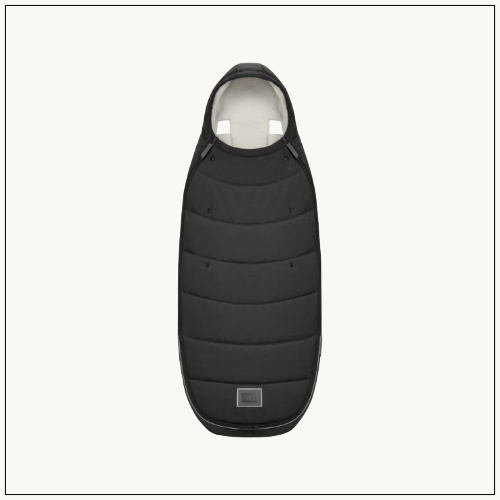
the Platinum Footmuff
The scene: Cold arrives differently when you have a baby. It is no longer something you manage with a better coat or a shorter walk. It is a logistical variable. Every outing requires an extra layer of calculation: how long will this take, how cold is it really, is the baby warm enough, and how do you know. The world contracts in winter. Then you learn that it doesn't have to.
The essential: The footmuff changes the equation entirely. Quilted and deeply insulated, it wraps around the baby like a second layer of the stroller itself—warm without bulk, sealed against the wind, completely separate from whatever the baby is wearing underneath. You do not need to bundle them into an extra snowsuit before every walk. You do not need to guess whether they are cold from the way they look. They are in the footmuff. They are warm.
Winter walks become part of the rhythm rather than an exception to it. The objects that make this rhythm possible — the stroller, the carrier, the small systems of the baby year — form a quiet collection of the essentials that define modern motherhood.
The cold air that wakes you both up. The particular stillness of a city in January. The baby blinking at frost on the branches. These are not hardships to be managed—they are mornings, and you are out in them, and the footmuff is the reason why.
The first winter passes. You were outside for most of it.
THE FIRST STEPS INTO TODDLERHOOD
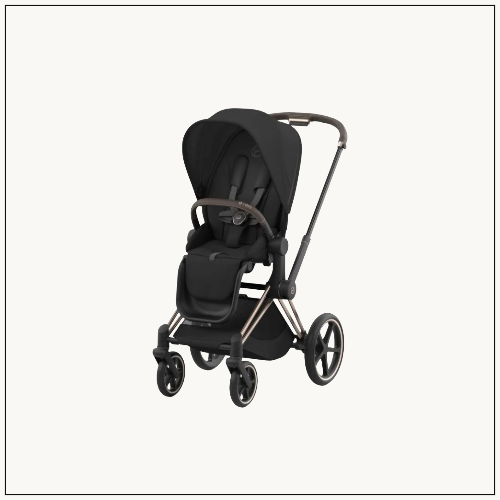
the Seat Unit
The scene: Somewhere in the first year, you look up and realise the road here has been survived. Not just survived—lived. The sleepless nights are fewer. The logistics that once felt impossible have become automatic. You are moving through the city again, and something is different. Not in the streets, which are the same. In you.
You are not the person you were before the baby. You are not only a mother either. You are both, and the two have been negotiating their way toward each other for a year, and what has emerged is something more settled than either one alone.
The essential: The Lux Carry Cot is long gone. The baby who needed to lie flat and be carried through the city in a protected room is now upright—sitting forward in the reversible seat, watching the world with the focused attention of a person who has opinions about it. The one-pull harness adjusts as they grow. The seat reclines for the nap that still happens, most days, somewhere between the park and home. But mostly, they are awake. Watching. Pointing. Entirely present.
The Sepia Black fabric. The rose gold frame catching the afternoon light. The leather handle worn to the specific warmth of something used and cared for. You chose this stroller the way you choose everything else in your life—deliberately, with attention to both form and function—and it has held up to a full year of being chosen. It still looks like itself. It still works like itself. And so, more or less, do you.
The women who pass and notice are the women who understand what it signals—that the person pushing this stroller did not disappear when the baby arrived. That she adapted. That she is here, moving through the city, and she brought herself with her.
The baby year is almost behind you. The toddler years are entering. The same chassis, the same frame, the Lux Seat Unit now configured for the child your baby has become—more generous proportions, more independence, more of everything. The system grew because it was designed to. You are not replacing anything.
You are continuing.
And the city, which looked so different twelve months ago, looks like yours again.
The Toddler Years — coming next.
Products featured in this journal were provided by Cybex for editorial review. Each item was tested within the daily realities of the baby year and included based on its design, functionality, and relevance to the modern mother. As always, the observations and reflections shared here remain entirely our own.

THE MODERN MOTHER
This editorial is part of The Modern Mother, a Currant series exploring how motherhood is being reshaped across culture, style, design, and daily life. Through essays, journals, and curated selections, the series examines the objects, rituals, and ideas that define contemporary motherhood.
CONTINUE READING

In the baby year, time becomes the rarest luxury. This journal explores the modern mother beauty routine — a faster approach to makeup built around five Merit essentials that create radiant skin, fresh colour, and a polished look in under five minutes. A practical guide to looking put together when the morning allows very little time.