Inside: Chanel
Few houses carry the weight of cultural mythology the way Chanel does. It is a name that exists simultaneously in fashion and film, in fragrance and art history — a house whose codes are so deeply embedded in the collective imagination that they no longer require introduction. The double C, the camellia, the chain-strap bag, the little black dress: these are not just design signatures. They are a shared language.
What makes Chanel genuinely worth examining is not the mythology, however. It is the discipline required to steward it. To inherit something this symbolically loaded and continue moving it forward — without diluting it, without abandoning it, without letting it calcify into self-parody — is one of the more demanding creative challenges in luxury. Most houses that carry this kind of cultural weight eventually collapse under it. Chanel, more often than not, does not.
Currant is spending 2026 inside the great luxury houses — their collections, their launches, their creative vision, and the ideas shaping what they are becoming. Chanel is where we begin. Not simply because it dominates the cultural conversation, but because it does so on its own terms, and has done for over a century. That kind of consistency deserves a closer look.
This page follows the house through the year: the collections, the beauty launches, the objects, and the ideas that reveal what Chanel is thinking — and where it is going.
Jump to:
Matthieu Blazy And The New Chanel
The Return Of The Original Bottle: N°5 Eau De Toilette
Rouge Noir And The Colour Red
mar 18
spring/summer 2026
Matthieu Blazy and the New Chanel
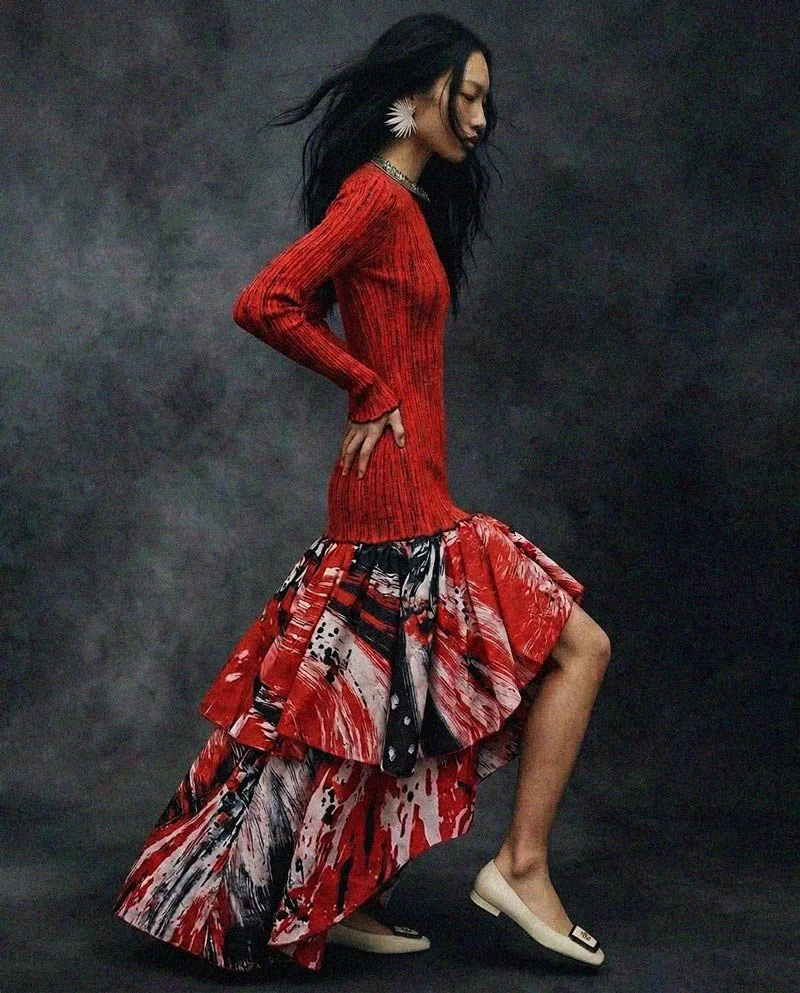
The question every new creative director at a legacy house must answer is not what to change. It is what to keep, and why. Get that wrong in either direction — discard too much, preserve too much — and the result is either a house that has lost its argument or one that has stopped making it. Matthieu Blazy, arriving at Chanel for Spring Summer 2026, understands this perfectly.
What he inherits is not simply a fashion house but one of the most heavily mythologised institutions in modern culture — a name that exists in the collective imagination with a completeness that most brands spend decades and never achieve. The double C, the camellia, the quilted leather, the chain strap: these are not just design signatures. They are a shared language, spoken universally around the world. That kind of cultural saturation is both an extraordinary inheritance and an almost impossible creative challenge.
His answer is not to resolve that tension but to work inside it. The codes remain. The camellia is still the camellia. The chain is still the chain. But the mood has somewhat shifted. Where previous seasons could feel precise to the point of formality — clothes that held their shape against the body and announced themselves accordingly — Blazy's Chanel breathes. Things are looser, softer, more willing to move. The silhouettes carry an ease that feels less like a stylistic decision and more like a change of philosophy: that the relationship between a woman and her clothes should be one of feeling rather than performance.
mar 11
spring/summer 2026
The Return of the Original Bottle: N°5 Eau de Toilette
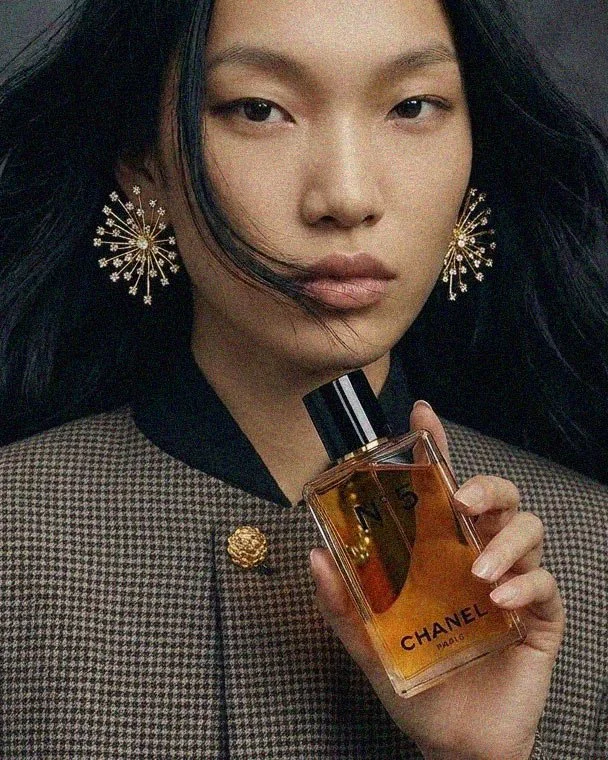
For its latest release, Chanel has done something that requires more confidence than launching something new: it has returned to the very beginning. The N°5 Eau de Toilette returns not in a redesigned flacon but in its original one — square glass, softly contoured edges, a cylindrical cap, the number five printed directly onto the surface in black. No label. No ornament. Nothing competing with the object itself.
This is not a sign of nostalgia — Chanel has never been particularly interested in looking backward for its own sake. It is a restatement: a notion that the authority of N°5 was never dependent on embellishment, and that simplicity, executed with complete conviction, remains one of the most powerful design positions available.
The fragrance has always been difficult to describe precisely, which is part of the point. It was introduced as the first truly abstract perfume — not an imitation of a single flower but a construction of an idea. The perfume opens with a shimmering aldehydic quality before settling into a floral heart of rose, jasmine, and ylang-ylang, grounded by sandalwood and vetiver. Under Olivier Polge, the Eau de Toilette carries that abstraction lightly: a modern floral with a woody elegance that feels less like a reformulation than a refinement.
mar 4
spring/summer 2026
Rouge Noir and the Colour Red
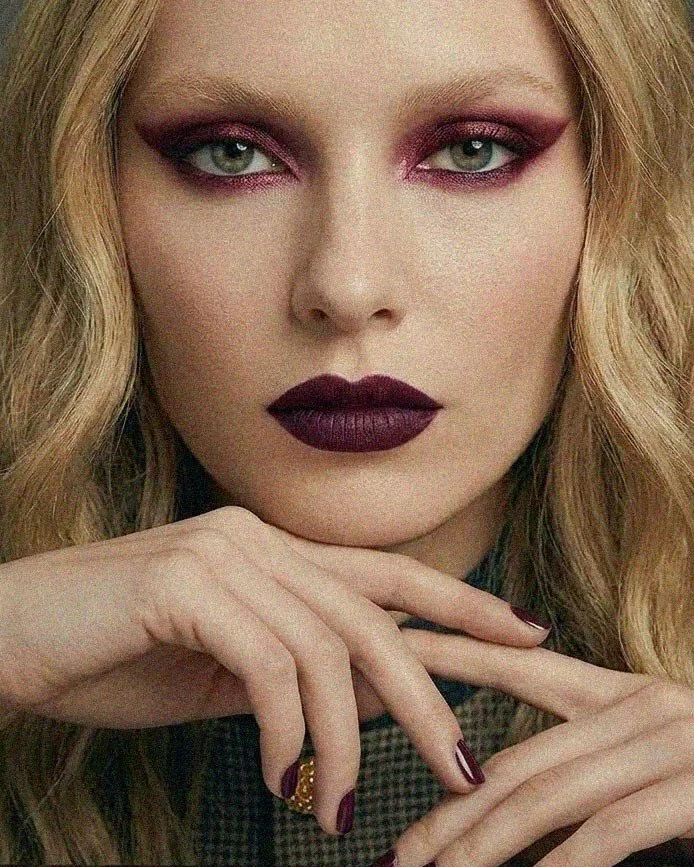
There is a particular kind of confidence required to build an entire collection around a single colour. Not a shade, not a mood — a colour. Red, in all its registers: heated, dusty, bruised, and luminous. For 2026, makeup artist Ammy Drammeh has done exactly that, envisioning a Rouge Noir collection that reads less like a product launch and more like an essay on what red can hold.
The range moves across the spectrum without ever losing its thread. There is mauve — red pulled toward grey, almost reluctant. Pink — red made younger, softer, less certain of itself. Rosy brown — red settled into skin, warm and unhurried. And then there is Rouge Noir itself, the shade that anchors everything: deep, lacquered, decisive. The one Uma Thurman wore in Pulp Fiction — a single shot that turned a nail colour into a cultural reference point and lodged it permanently in the Chanel archive.
What makes this collection worth paying attention to is not the breadth of the palette but the conviction behind it. In an era when beauty trends have drifted toward the imperceptible — blurred, bare, deliberately unfinished — Chanel steps in the opposite direction. Drammeh's vision doesn't hedge. It doesn't mute. It commits to the idea that red, worn with intention, remains one of the most powerful things a person can put on.
Notes
Currant Essays
Currant Essays is the magazine’s long-form editorial writing. These essays interpret cultural moments and shifts shaping modern life, culture, and style, offering considered readings of the present grounded in context, observation, and reflection.
Visual Art
All imagery on Currant is created in-house, as part of our commitment to thoughtful and original visual storytelling.