Inside: Hermès
Few luxury houses have made a virtue of withholding quite like Hermès. Where others announce, Hermès waits. Where others chase relevance, Hermès maintains position — grounded in the knowledge that genuine craft, practised with enough patience and conviction, requires no further justification.
What makes Hermès worth studying closely is not its mythology, though that mythology is considerable. It is the consistency of the thinking beneath it: a house that has never needed to reinvent itself because it understood, early and completely, what it was. Leather. Silk. Horses. The hand. A belief that the object itself — made slowly, made well — is argument enough.
That discipline extends to everything Hermès touches. The ready-to-wear carries the same unhurried intelligence as the saddlery that preceded it by a century. The fragrances are built on the same logic as the scarves — generous in their complexity, uninterested in easy legibility. Even the beauty range, still relatively new in the longer arc of the house, moves according to Hermès time rather than the industry's.
This page follows that thinking through the year: the collections, the objects, the launches, and the ideas that reveal what Hermès is saying — and, equally, what it continues to choose not to say.
spring/summer
A Moment By The Sea with
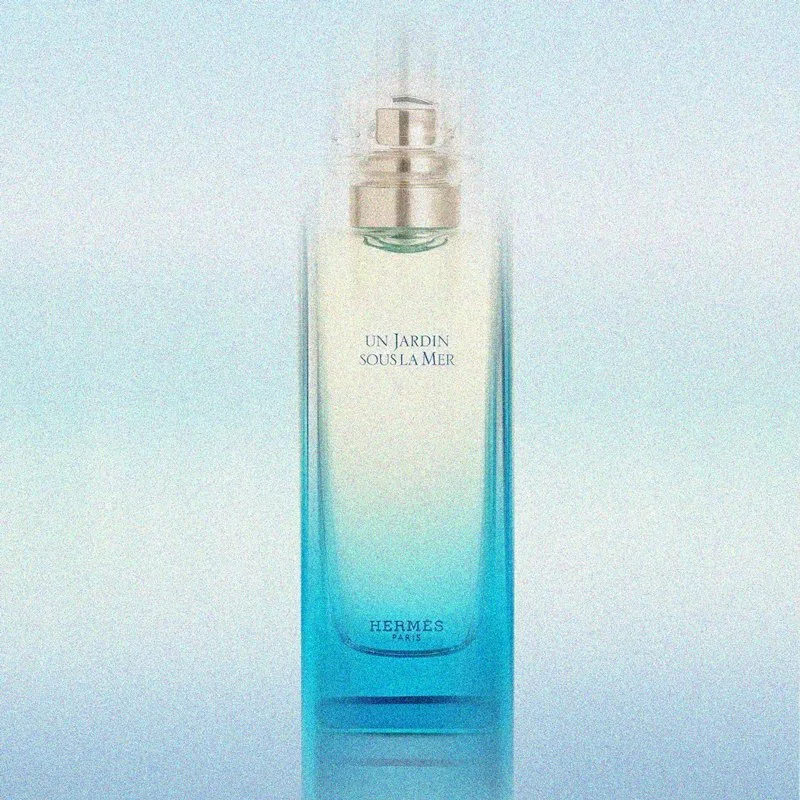
Un Jardin sous la Mer
Aquatic perfumery has a reputation problem. The genre that once felt fresh — ozonic, cool, vaguely oceanic — has spent the better part of three decades producing fragrances that smell less like water and more like the idea of water as imagined by someone who has never left the city. Clean. Inoffensive. Immediately forgettable.
Christine Nagel is not interested in that tradition. Un Jardin sous la Mer, the newest chapter in Hermès's Jardins collection, takes the sea as its starting point and then largely abandons the obvious. There is no brine here, no crash of waves, none of the aquatic shorthand that has come to define the genre. Instead, Nagel proposes something stranger and more considered: a garden that exists beneath the surface, where light behaves differently and the usual rules of landscape no longer apply.
The Jardins series has always worked this way. Each fragrance names a real place — the Mediterranean, the Nile, a garden after the monsoon — and then reconstructs it as atmosphere rather than document. What the air holds. What the heat does. The emotional residue of a particular kind of afternoon. Un Jardin sous la Mer pushes that logic further by imagining somewhere that technically cannot exist, and trusting the wearer to follow.
The composition earns that trust. Mineral notes meet the creamy brightness of tiare flower and the warm, nut-like depth of tamanu — materials that together produce something genuinely difficult to place. It is not marine. It is not floral. It occupies the space between, evoking depth and luminosity rather than any specific ingredient. It smells, somehow, like the idea of blue.
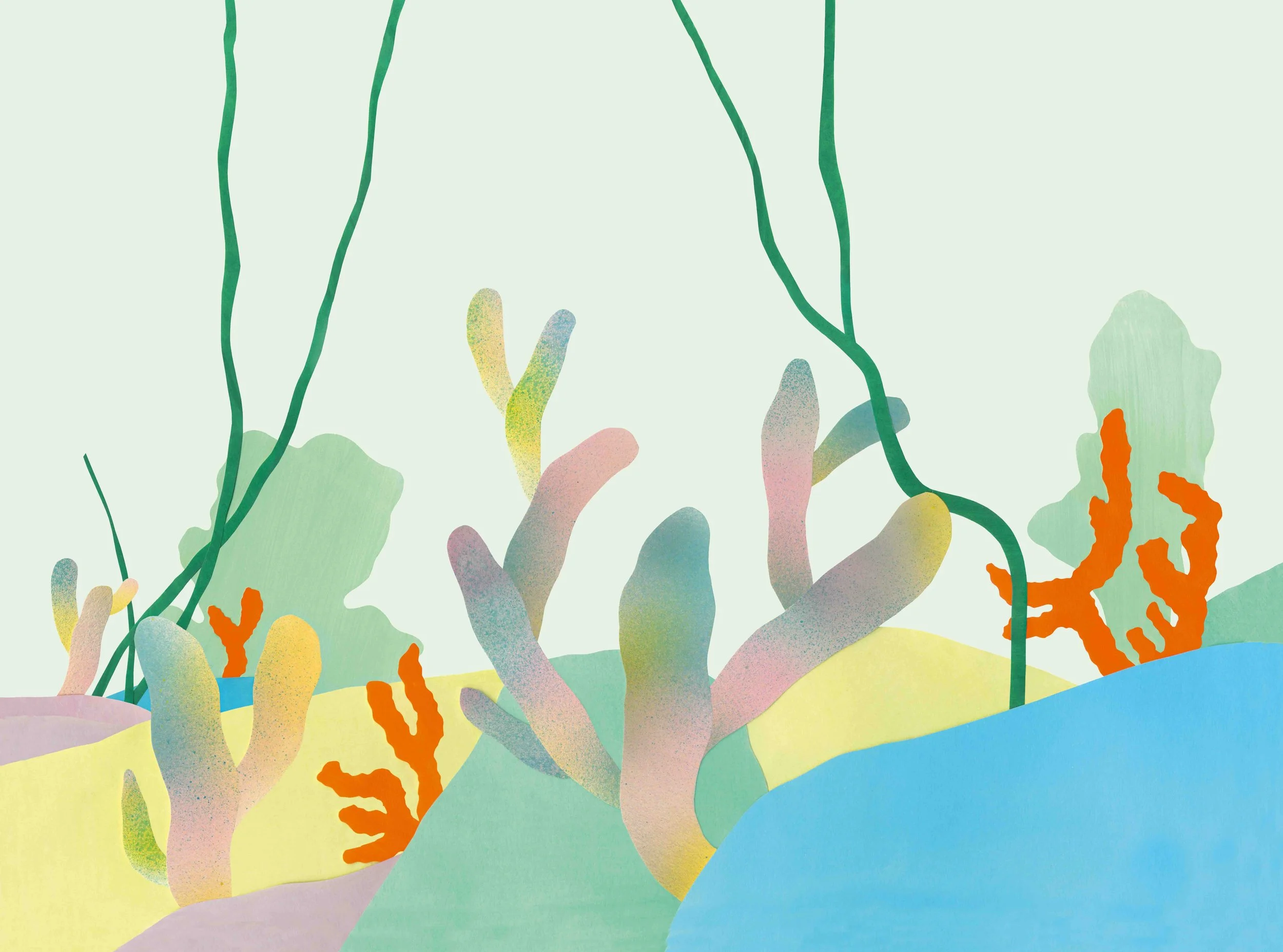
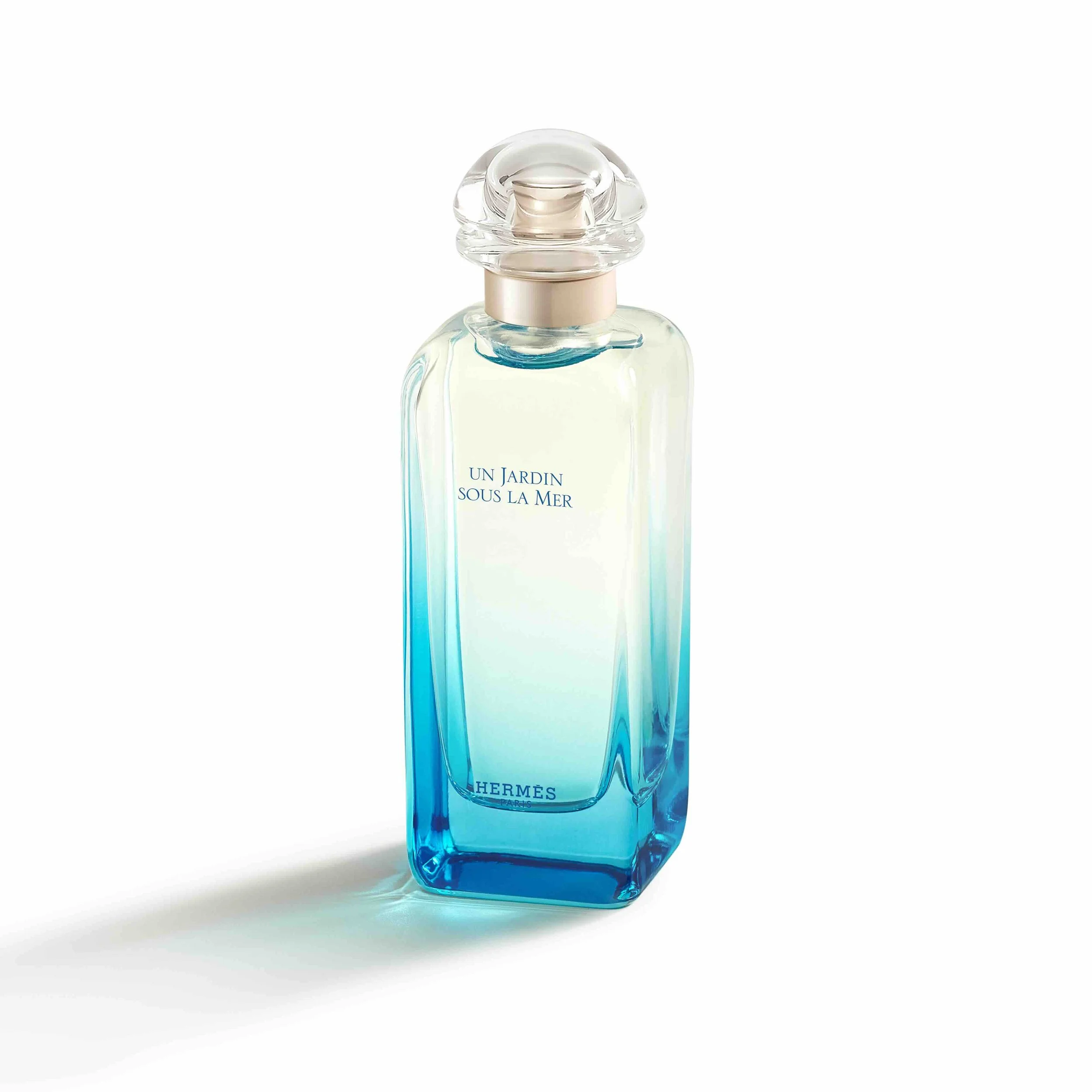
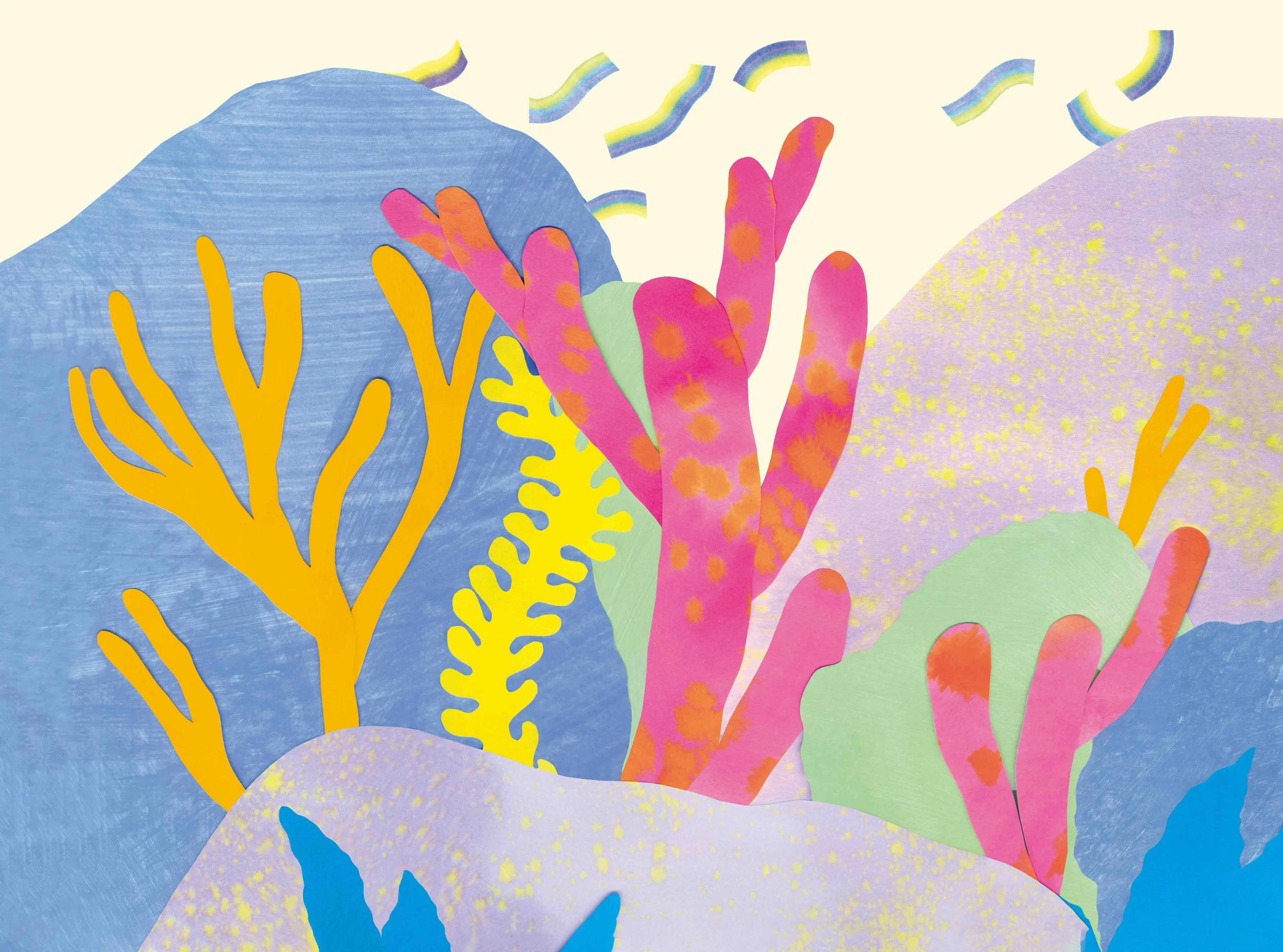
The bottle gives the fragrance its clearest visual statement. Hermès's signature lantern form carries a gradient from deep oceanic intensity at the base to a pale, airy horizon at the neck — a quiet piece of design that rewards attention without demanding it. Aino-Maija Metsola's box artwork continues the idea in watercolour: dissolved contours, softened edges, a landscape in the process of becoming water.
What makes Un Jardin sous la Mer worth paying attention to is not that it smells like the sea. It is that it smells like something the sea makes you feel — and that is a considerably harder thing to achieve.
Visual by Igrien
Illustrations by Anne Brugni
Visual by Studio des Fleurs